About
Economist working on trade, globalization and labour markets in Scandinavia, with a particular focus on the Øresund region.
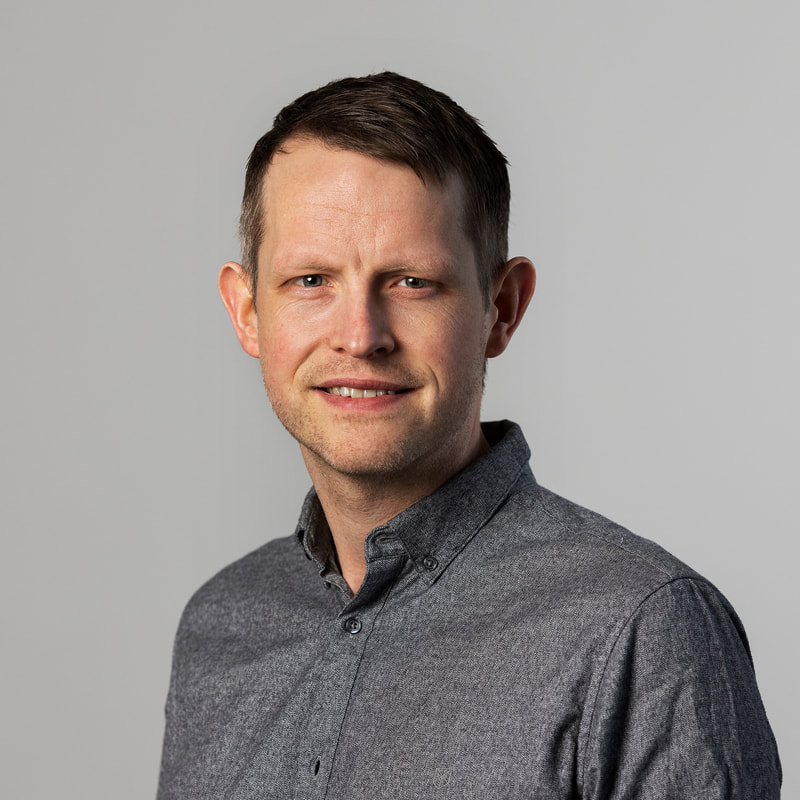
Background
I was born and raised in Iceland, studied economics at the University of Iceland, with an exchange year at the University of Oklahoma, and at Boston University, and worked as an economist in Reykjavik before moving to Lund for my doctoral studies in 2011.
In Lund, with Copenhagen a short train ride across the bridge, I became interested early in the Øresund region: two countries, two sets of institutions and a labour market that increasingly spans both. That interest has shaped my research for well over a decade. Today I live in Sweden and work in Copenhagen, which makes me one of the cross-border commuters I study.
Most of my work builds on Danish and Swedish administrative microdata. Over the years I have built a database that merges and links these registers, with multiple links across the border. The result is a unique dataset, and it underpins several of my research projects, including work on scale economies in global value chains, knowledge spillovers from cross-border commuters and multinational firms, as well as a number of others. The setting is local, but the questions are not: how production is organised in global value chains and how knowledge travels through trade networks. Some of my projects study value chains well beyond Denmark and Sweden.
Iceland
Born and raised; BS, University of Iceland, 2008
United States
Exchange year, University of Oklahoma, 2006–07; MA, Boston University, 2009
Lund
PhD, Lund University, 2016
Copenhagen
University of Copenhagen, 2017–2026; ROCKWOOL Foundation Research Unit since 2025
Biography
Björn Thor Arnarson is a researcher at the ROCKWOOL Foundation Research Unit in Copenhagen, an affiliated researcher at the Department of Economics, Lund University, a CESifo affiliate and an affiliated research fellow at EPRU. He uses Danish and Swedish administrative data to study how globalization, trade and knowledge spillovers affect firms and workers, with a particular focus on the Øresund region. Born in Iceland, he studied economics at the University of Iceland and Boston University (MA) and was chief economist of the Iceland Chamber of Commerce before completing his PhD at Lund University (2016), and he was later an assistant professor at the University of Copenhagen (2021–2026) and a Marie Skłodowska-Curie fellow. He has built a unique database that merges and links Danish and Swedish administrative microdata across the border, which underpins much of his research. His work has appeared in the Journal of International Economics and the Scandinavian Journal of Economics. He is fluent in Icelandic, English and Swedish and has a working knowledge of Danish.

What does a shared labour market across the strait mean for firms and workers on both sides?

Research on the region
Knowledge Spillovers from Cross-Border Commuters
The opening of the bridge as a natural experiment: Swedish commuters raise productivity in Danish firms and the wages of their Danish coworkers. With Munch, Olsen and Simonsen; ROCKWOOL Foundation Study Paper 215.
R&D Employment and Transmission in Trade and MNE Networks
How a Swedish R&D tax reform spills over to Danish trade and multinational partners. With Buus, Munch and Schaur; ROCKWOOL Foundation Study Paper 217.
Bridging Trade Barriers
The bridge as a fall in trade costs for Malmö firms, and what it did to their exporting. Lund University Working Paper 2015:6.
Affiliated researcher, Centre for Øresund Region Studies, Lund University, 2017–2025
Marie Skłodowska-Curie project BRIDGE, Labour Market Integration: Consequences of Cross-Border Commuting (EU Horizon 2020), and the EPRN project The Labour Market Effects of the Öresund Bridge (2017).
Areas of expertise
The Øresund region
Cross-border commuting, the integrated Copenhagen–Malmö labour market, knowledge spillovers across the bridge.
Danish and Swedish register data
Merging and linking administrative microdata across Denmark and Sweden, including links across the border.
Trade policy and tariffs
US tariffs, trade wars, what they mean for small open Nordic economies.
Knowledge spillovers
How know-how travels between firms, workers and regions, including across national borders.
Globalization and workers
Offshoring, import competition, wages and well-being.
Multinationals and R&D
How firms’ research and supplier networks spread across borders.
Exporting and export promotion
Which firms export, and what export-support policy achieves.
Iceland’s economy
Icelandic trade, EU relations and business conditions.
Languages
Icelandic
Native
English
Fluent
Swedish
Fluent
Danish
Working knowledge
Research in plain language
As firms grow, they hand more tasks to their suppliers, and the workforces of firms and suppliers become more specialized. Using Danish data that link firms’ cross-border trade to their employees, we show that this outsourcing makes firms markedly more productive: without it, average labour productivity would be 25 percent lower.
Globalization and the Gender Gap in Mental Well-being
When a Danish firm trades with partners in distant time zones, work spills outside normal hours. In such firms, women become more likely than men to use antidepressants, with the largest effects among college-educated workers under 45 and single mothers.
Knowledge Spillovers from Cross-Border Commuters
The Øresund Bridge turned Copenhagen and Malmö into one labour market. Danish firms that took on more Swedish commuters became more productive, and the Danish colleagues working alongside the commuters earned more, consistent with knowledge travelling across the border.
Press, outreach and policy
Until 2026 · policy
The Road to Exporting (RoadtoExporting.dk, sunset in 2026): lead designer of the research-based policy website on exporting, with Jakob Munch and Georg Schaur, financed by the Innovation Fund. Example of the website · Presentation · Methods appendix
2025 · op-ed
Vísbending (in Icelandic): “Trump og tollar: Fórn á við margfalda íslenska verðmætasköpun – ár eftir ár?”
Press
Jyllands-Posten on time-zone differences and women’s mental health: “Job på tværs af tidszoner rammer yngre kvinders mentale helbred”
2021 · press
Weekendavisen on school holidays and COVID-19: “Rejsefeber”
2021
University of Copenhagen news: How a holiday affected the spread of COVID-19 in Europe
Conference organising
NOITS 2025, Copenhagen, and NOITS 2021, Iceland
Organiser of NOITS, the annual Nordic conference in international economics.
www.noits.org
Administrator of the network homepage.